• TRUSTED RESEARCH

    TRUSTED RESEARCH | STRATEGIC INSIGHT

    SMB. CORE MIDMARKET. UPPER MIDMARKET. ECOSYSTEM
    LEARN MORE
  • COMMS, COLLAB, CONTACT CENTER

    COMMS, COLLAB, CONTACT CENTER

    SMB & Midmarket Buyers Collaboration, Contact Center Study
    LATEST RESEARCH
  • DATACENTER SOLUTIONS

    DATACENTER SOLUTIONS

    SMB & Midmarket Datacenter Solution Adoption Trends
    LATEST RESEARCH
  • PARTNER ECOSYSTEM

    PARTNER ECOSYSTEM

    CHANNEL PARTNER ECOSYSTEM TRENDS STUDY
    LATEST RESEARCH
  • BUYER JOURNEY

    BUYER JOURNEY

    SMB & Midmarket Buyers Journey Research
    LATEST RESEARCH
  • BUYER PERSONAS

    BUYER PERSONAS

    SMB & Midmarket Technology Buyer Persona Research
    LATEST RESEARCH
  • ARTIFICIAL INTELLIGENCE

    ARTIFICIAL INTELLIGENCE

    SMB & Midmarket Analytics & Artificial Intelligence Adoption
    LATEST RESEARCH
  • IT SECURITY TRENDS

    IT SECURITY TRENDS

    SMB & Midmarket Security Solutions Adoption Trends
    LATEST RESEARCH
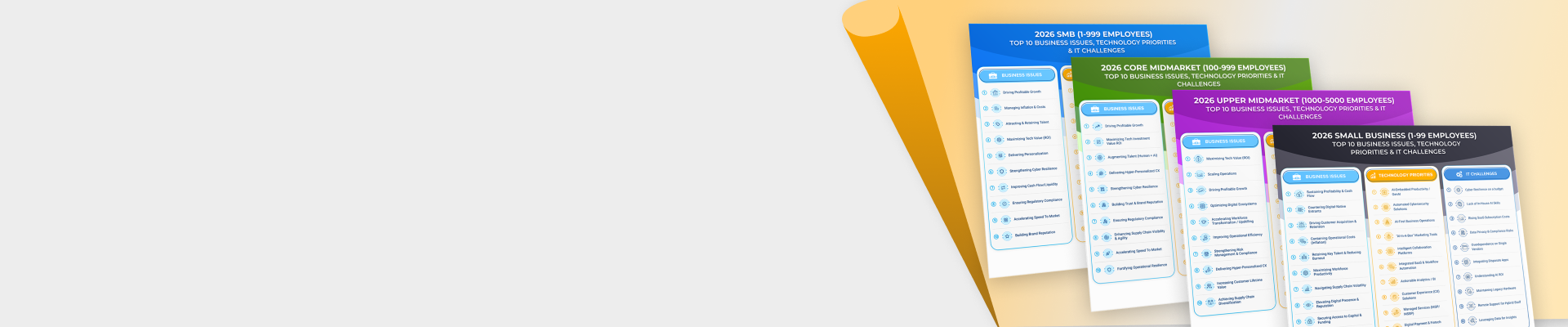
  • 2026 TOP 10 SMB BUSINESS ISSUES, IT PRIORITIES, IT CHALLENGES

    2026 TOP 10 SMB BUSINESS ISSUES, IT PRIORITIES, IT CHALLENGES

  • 2026 TOP 10 SMB PREDICTIONS

    2026 TOP 10 SMB PREDICTIONS

    SMB & Midmarket: Autonomous Business
    READ
  • 2026 TOP 10 PARTNER PREDICTIONS

    2026 TOP 10 PARTNER PREDICTIONS

    Partner & Ecosystem: Next Horizon
    READ

Techaisle Analyst Insights

Trusted research and strategic insight decoding SMBs, the Midmarket, and the Partner Ecosystem.
Anurag Agrawal

Co-Marketing in the Channel: 64% of Partners Say It Works – Here is Why

Co-marketing is one of the most under-invested and under-appreciated tools in the channel enablement stack. Techaisle’s latest global survey (N=4500) of channel partners - spanning partners across revenue tiers, service models, and geographies - makes a data-driven case that should redirect how cloud providers allocate their channel marketing resources.

64% of channel partners report high or very high usage of co-marketing templates. That places co-marketing as the third most desired go-to-market asset in the entire enablement portfolio, behind only solution briefs and email templates, and ahead of TCO/ROI calculators, presentations, whitepapers, and ready-to-use digital campaigns. When nearly two-thirds of the channel actively seek co-marketing tools, the strategic question shifts from whether co-marketing works to why vendors are not building better co-marketing assets.

techaisle channel co marketing

Partners Have Marketing Teams, and They Know How to Use Them

One of the more persistent misconceptions in channel strategy is that partners lack marketing capability and that they are sales-led organizations without the staff or sophistication to execute marketing programs. The data says otherwise.

65% of all partners confirm that their marketing teams regularly use cloud provider GTM assets, rising to 81% among the largest partners. Marketing teams are the second-most frequent consumers of these assets, after sales teams (76%). These are not organizations where marketing is an afterthought or a single person writing blog posts. These are teams that are actively engaged in using vendor-provided tools to drive pipeline, when the tools are worth using. The question is not whether partners have marketing capability. The question is whether vendors are giving those teams assets that match their sophistication.

Anurag Agrawal

The Architecture of Autonomy: How Zoho’s Agentic Infrastructure and Partner Ecosystem are Rewiring the Upmarket Enterprise

The narrative surrounding enterprise software is often dominated by surface-level observations about application breadth, licensing models, or the sheer volume of integrated tools. While a lot has been written recently about ZohoDay 2026 - largely focusing on the company's distinct corporate culture, bootstrap philosophy, and expansive application suite - there is an equally profound architectural story unfolding beneath the surface, and I see that the true strategic breakthrough lies much deeper. The battleground for the upmarket - midmarket and enterprise organizations - is no longer about feature accumulation, it is entirely about architectural sovereignty and infrastructural readiness.

At ZohoDay 2026, the discourse shifted definitively from software provisioning to autonomous orchestration. The conventional vendor approach to the upmarket has been to bolt artificial intelligence onto legacy, fragmented systems, hoping the resulting friction is masked by polished user interfaces. Zoho is taking a fundamentally divergent path, constructing a unified, agentic operating system designed from the silicon up. This is a profound rewiring of enterprise physics, providing organizations with the agility of a startup anchored by the rigorous governance of a Fortune 500 entity. To understand why this approach is poised to dominate the upmarket, we must dissect the core architectural pillars - AppOS, the semantic data fabric, customer journey orchestration, and ecosystem-led verticalization - and analyze exactly why they align perfectly with the operational realities of growing enterprises.

IMG 5527

AppOS: Establishing a Sovereign Control Plane

During a candid conversation with Raju Vegesna, the underlying philosophy driving this architectural reset clicked into place. We were discussing the industry's frantic rush to deploy AI, and he emphasized a critical reality: while the broader market is obsessing over the capabilities of AI agents, the actual deployment in the enterprise is stalling out on platform-level governance. You simply cannot build autonomous, reliable AI on a fragmented foundation. This is precisely the crisis that AppOS is designed to solve.

Anurag Agrawal

Shadow AI, Dirty Data, and the Quiet Revolution in the Core Midmarket

The Shift from Experimentation to Agentic Workflows

Based on Techaisle’s latest survey of over 5000 businesses, the 2026 core midmarket agenda reveals a profound transition from the era of experimental digital transformation to a period of rigorous, outcome-driven architectural overhaul. The data indicates that midmarket firms have moved beyond the initial hype of generative AI and are now confronting the complex reality of operationalizing it. The top business issue, driving profitable growth, is no longer being pursued through sheer volume or expansion, but through the precise application of Agentic AI and process automation. This alignment suggests that leadership has recognized that sustainable growth in a high-cost environment requires autonomous systems capable of executing complex workflows, rather than simple chatbots that merely retrieve information.

2026 techaisle core midmarket

Anurag Agrawal

The Enablement Delusion: How Partner Elevate Solves the Channel’s Execution Gap

The channel is facing an efficiency mandate. As I analyze the data from our recent Techaisle 2026-2028 Channel & Ecosystem Predictions, a stark reality emerges: traditional methods of partner enablement are failing to keep pace with market demands. For decades, the industry has operated on a linear model—vendors provide training, certifications, and portals, and expect partners to magically transform that information into revenue. But in an era where AI is redefining the very nature of value delivery, this passive approach is no longer sufficient.

Partner Elevate has stepped into this vacuum. Having analyzed their platform and methodology, I believe they are solving a critical, structural problem in the ecosystem: the chasm between learning and doing. They are not just another training vendor; they are an execution engine that operationalizes the transition partners must make to survive and thrive.

The Problem: The Enablement Delusion

Our latest Techaisle surveys on Channel Partner Business Issues and Priorities highlight a disconnect. Partners are overwhelmed. They are dealing with the complexities of shifting their business models and standing out in a crowded market. Yet most vendor programs are still stuck in the past, offering product-centric training that teaches partners what a product does but not how to build a profitable business around it. We call this the Enablement Delusion—the false belief that access to content equals capability to sell.

This friction is visible across three critical areas:

Trusted Research | Strategic Insight

Techaisle - TA