• TRUSTED RESEARCH

    TRUSTED RESEARCH | STRATEGIC INSIGHT

    SMB. CORE MIDMARKET. UPPER MIDMARKET. ECOSYSTEM
    LEARN MORE
  • INTERWORK 2.0: THE AGENTIC FUTURE OF CONNECTED BUSINESS

    INTERWORK 2.0: THE AGENTIC FUTURE OF CONNECTED BUSINESS

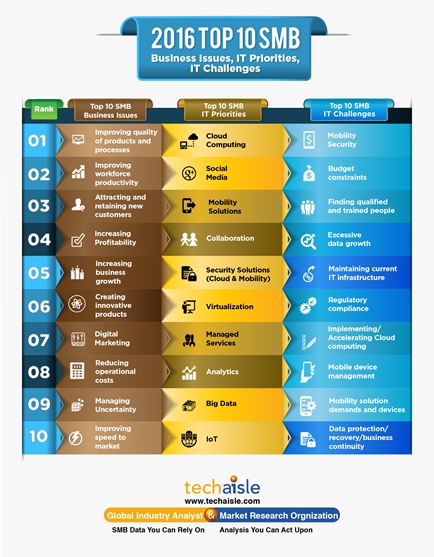
  • 2026 TOP 10 SMB BUSINESS ISSUES, IT PRIORITIES, IT CHALLENGES

    2026 TOP 10 SMB BUSINESS ISSUES, IT PRIORITIES, IT CHALLENGES

  • 2026 TOP 10 SMB PREDICTIONS

    2026 TOP 10 SMB PREDICTIONS

    SMB & Midmarket: Autonomous Business
    READ
  • 2026 TOP 10 PARTNER PREDICTIONS

    2026 TOP 10 PARTNER PREDICTIONS

    Partner & Ecosystem: Next Horizon
    READ
  • ARTIFICIAL INTELLIGENCE

    ARTIFICIAL INTELLIGENCE

    SMB & Midmarket Analytics & Artificial Intelligence Adoption
    LEARN MORE
  • IT SECURITY TRENDS

    IT SECURITY TRENDS

    SMB & Midmarket Security Adoption Trends
    LATEST RESEARCH
  • BUYERS JOURNEY

    BUYERS JOURNEY

    Technology Buyer Persona Research
    LEARN MORE
  • PARTNER ECOSYSTEM

    PARTNER ECOSYSTEM

    Global Channel Partner Trends
    LATEST RESEARCH
  • CLOUD ADOPTION TRENDS

    CLOUD ADOPTION TRENDS

    SMB & Midmarket Cloud Adoption
    LATEST RESEARCH
  • FUTURE OF PARTNER ECOSYSTEM

    FUTURE OF PARTNER ECOSYSTEM

    Networked, Engaged, Extended, Hybrid
    DOWNLOAD NOW
  • MANAGED SERVICES RESEARCH

    MANAGED SERVICES RESEARCH

    SMB & Midmarket Managed Services Adoption
    LEARN MORE

Techaisle Analyst Insights

Trusted research and strategic insight decoding SMBs, the Midmarket, and the Partner Ecosystem.
Anurag Agrawal

SMB Content Management & Collaboration Solutions Adoption: Seven Key Trends


    1. Collaboration is a critical solution priority. In a list of ten solutions ranked by SMB use and planned use, “content management & collaboration solutions” is positioned as the fifth highest-ranked solution. However, the four solutions that are more highly ranked – social media, mobility, BI, and cloud – all deliver, and are expected to deliver, collaboration-related benefits. Viewed not just as a solution category but as an organizational capability, it is clear that collaboration is pervasive and critical to SMB IT buyers. This is reflected in data demonstrating that collaboration (and cloud, social media and mobility) is seen as contributing to business growth, and not strictly to cost savings. Larger SMBs are explicit in recognizing this imperative: within mid-market (100-999 employees) businesses, content management & collaboration is ranked as the second most important IT priority.


    1. Content Management & Collaboration systems are in broad use. Collaboration has traditionally been seen as a mid/large business solution, but broad market trends, including the enormous reliance on mobility, the trend towards flexible partnerships between SMBs and between SMBs and corporate clients, and the general trend of including customers within the framework of collaboration solutions have all contributed to much broader demand for collaboration solutions.


    1. Content Management & Collaboration solutions are file-first, not person-first. Collaboration is often seen as enabling human-to-human connections, but Techaisle’s SMB survey data shows that SMB users consider content management & collaboration around files – such as that offered by Dropbox or Box – to be the most important aspect of a collaboration solution. In today’s market, SMB content management and collaboration is a three step process. The central SMB buyer requirement for a content management & collaboration solution is the ability to share files from desktop or mobile devices, the second is to enable online interaction, and the third is to provide richer media and media escalation for person-to-person communications.


    1. There is a strong connection between cloud, mobility and collaboration. Mobility, cloud and collaboration are all important trends in today’s IT market, and Techaisle SMB survey data indicates that they are tightly interconnected. Mobility is a key driver of collaboration demand, with 300 million WW SMB mobile workers (42 percent of workforce) looking for framework technologies enabling them to connect with suppliers, customers and each other. At the same time, collaboration is seen as a key attribute of successful cloud solutions, with more than one-third of US SMBs citing “the ability to provide or support collaboration” as a key success factor in cloud solutions.


    1. Key business drivers for content management & collaboration solution adoption are changing. Both small and mid-sized firms have viewed creation of a central repository of information as the most important business driver for content management & collaboration investments, and both groups report that a need to build synergy across geographically-dispersed team members and a need to respond to leadership mandates are also key business drivers for content & collaboration solution adoption. However, these drivers are changing. New SMB buyers are still focused on creating central information repositories, but are more likely than existing solution users to emphasize speed of innovation and improving the ability to schedule meetings (in mid-sized firms) and the need to speed decision making and improve teamwork (in small businesses).


    1. SMB BDMs are the key champions for content management & collaboration solutions. Techaisle research looked at the issue of internal leadership for content management & collaboration adoption from two perspectives. In both cases, BDMs, and not IT, emerged as the key force driving decisions to deploy collaboration solutions. Techaisle believes that in response, collaboration vendors need to position their wares as business solutions and not as technology systems.


    1. Key success metrics for collaboration systems center on speed of response to customers/prospects and business decision timeliness and accuracy. Survey results show that both small and mid-sized businesses are most likely to assess the success of content management & collaboration solution initiatives in terms of improved speed of response to customers and prospects. They are also likely to consider timeliness and accuracy of business decisions as key success indicators. Techaisle urges suppliers to create marketing messages that emphasize, in clear and measurable terms, how investment in a solution will improve the timeliness of responses to customers and prospects, and to provide insight into how these solutions also enhance internal decision processes.


Table of Contents of the report is here: 360 on SMB & Mid-Market Content Management & Collaboration Solutions Adoption Trends Study

Anurag Agrawal

The Power of Value Based Communities

There's been a lot of talk and blogging about communities being central to people on the web. The web, pundits say is changing from one of passive consumption to a participatory (I hate the word "interactive") experience. A lot of web x.0 sites such as Diggit, MySpace, facebook are exactly about that. Despite the talk and clear evidence marketing departments are mired in traditional approaches that do not directly address the power of Value Based Communities. Lets just call them VBCs for simplicity. I believe that these marketers ignore communities at their own risk. So what are VBCs and why are they important? Its easy to define a VBC - a community that comes together as a result of shared beliefs. Those beliefs could range from an interest in saving the environment, a love for dogs (or other animals), a passion for astronomy and so forth. Communities have existed throughout evolution. The first community was drawn together with a common belief in survival resulting in early instances of prehistoric man hunting in groups and forming families. Communities then are the basis of existence! indeed great changes have come about as a result of communities being created along shared values - The creation of America being a prime example. But enough about history. What about today? What role do communities play and why are they ever more relevant? One has only to witness the current election where Obama's message of "Change" is creating a voter community sharing a common belief and value that change is essential in government (Politicians in my view have been consummate marketers to creating and pandering to communities). It is amazing then that so few marketing efforts focus on understanding and mining the power of communities engaging instead in traditional marketing efforts. Market research in particular tends to fall short in this respect. Here are some reasons why marketers should actively focus on VBCs

1. Shared values = MOTIVATION: Every marketer seeks to understand what motivates a customer. Values are the strongest form of motivation that spurs action

2. Community = ACTION: A community comes together for the purpose of taking action, driven by a set of values. All communities without exception can clearly identify their purpose and values. Conversely, communities that cannot do so eventually fracture and fade away or give rise to new communities

3. Community = VALUED PEER INFLUENCES: A community's members are highly instrumental in impacting each others choices about a variety of things. The affinity brought about by shared values often leads to valuing a peer's recommendation and eventual purchase

As stated earlier, current marketing approaches often ignore these realities, in most cases either totally ignoring their existence or ignoring the values that created the community in the first place. Traditional marketing tactics place emphasis on a standard criteria such as customer's location, demographics, purchase preferences, race, age, education etc. - in other words, marketers understand the "what" and the "how" but rarely do they venture into understanding the "why" from a values perspective. And if at all they do, there is a broad generalization that hides critical differences among individuals. Among voters, for example, labels such as Republican or Democrat are supposed to indicate shared beliefs but the truth is that such generalizations mask shifts in values occurring within each party. Each party now has sub-groups such as Liberal Republicans and Conservative Democrats. Consumer group descriptions such as GenX, GenY also mask a multitude of values. I will stop here now and continue on this topic over the next few days. In the mean time, I look forward to your thoughts, comments and opinions in the coming days.....

Abhijeet Rane (This email address is being protected from spambots. You need JavaScript enabled to view it.)

Anurag Agrawal

Vidtel: A cloud-based Video Conferencing service for SMBs for any-to-any connections

We all know that video conferencing adoption is on the rise among SMBs. Collaboration technologies such as Video and Web Conferencing will increasingly be important to SMBs to satisfy their priority to make employees more productive. While these solutions have been around for a long time we believe that broad adoption among SMBs is upon us as evidenced by the priority assigned to such technologies versus the current level of penetration. As per Techaisle’s research data, currently in the US there are nearly 75,000 SMBs that use video conferencing and 790,000 that use web conferencing.

There are obviously many solutions that SMBs can take advantage of ranging from hosted to onsite solutions. Key players such as Microsoft (Live Meeting/Lync), Citrix (GoToMeeting) and Cisco (Webex) have great brand and mind share in the SMB space. However, there comes a time in the life of an SMB, depending upon its vertical or the role of the user, when high-quality, easy-to-use, any-to-any video connections’ based video conferencing becomes too important to ignore. This is where Vidtel steps in.

Vidtel is a cloud-based video conferencing service for any-to-any video connections. Its MeetMe offering allows multiple conferencing participants incredible interoperability, that is to say, it allows for users to seamlessly invoke a video conference, connecting video phones, PCs, tablets, room systems, smartphones and devices using SIP, H.323, Skype or GoogleTalk.

Vidtel is a small but growing organization founded by dynamic entrepreneurs who are focused on bringing affordable high-quality cloud-based video conferencing solutions to SMBs. To that extent, Vidtel has also recently partnered with Vu TelePresence that allows both Vidtel and Vu to gain from each other. Vu is able to bring MeetMe capabilities to its customer base and Vidtel stands to gain from Vu’s already established market presence.

We tried Vidtel’s MeetMe service. It seemed quite simple to initiate and conduct a video conference. To initiate a meeting, a Vidtel SMB customer with a MeetMe account simply provides the meeting room dial-in information to other participants, as one would with an audio conferencing bridge and set up a meeting time. For example, if the meeting were in room 2002, one Skype user would be asked to add Vidtel.2002.1 and the other Vidtel.2002.2 to his/her Skype contacts and dial that contact from either a tablet, mobile or PC/Mac. SIP users would dial This email address is being protected from spambots. You need JavaScript enabled to view it. and H.323 participants would dial 65.50.196.118 then 2002#. Users can even add security PINs.

A question that often arises is, what about support for SMBs? Vidtel provides level 1-4 support via video/phone/email for SMBs directly and levels 2-4 for resellers and wholesale providers who own the SMB customer relationship.

Vidtel offers a tiered pricing structure, from a low of US$199/month to US$599/month, depending upon the number of participants, standard or high-definition video.

SMBs who are seriously debating about using multi-point, any-to-any, high-definition video conferencing capabilities should check out Vidtel.

Anurag Agrawal
Techaisle

Anurag Agrawal

34 percent SMBs want out-of-box Collaboration within SaaS/Cloud applications

Techaisle’s SMB & Midmarket Collaboration adoption research found that apart from traditional collaboration solutions of file sharing and communication, SMBs need SaaS business applications to have collaborative properties. 34 percent of SMBs and 44 percent of midmarket businesses say that SaaS applications should have built-in collaboration properties out-of-the-box. They say that the success of a cloud business application is its ability to provide /support collaboration, including email and/or hosted telephony.

Techaisle survey data shows that there is a strong connection between SaaS applications and collaboration. In some ways, these connections are intuitive: SaaS is a resource that can be accessed simultaneously by multiple individuals located anyplace where there is a network connection and cloud is inherently supportive of collaboration, and many applications are either explicitly focused on collaborative activities (ranging from SharePoint to CRM) or embed these capabilities (as with productivity applications like Office 365 or Google Apps).

Techaisle’s SMB research found quantitative support for these perceptions. When SMB respondents were asked, “what are the key attributes of a successful cloud solution?” As would be expected, security, scalability, and data management (including disaster recovery) were prominent in these responses. However, the most common answer was “the ability to support mobility,” which speaks to the requirement to enable mobile collaboration. And the fifth-most common response was “the ability to provide or support collaboration.” As the figure below shows, this is an important issue across size categories: it was cited as an important cloud success attribute by nearly half of near-enterprise (500-999 employees) firms, and also by companies with just 10-19 employees.

techaisle-saas-collaboration-connection-blog-smb-attributes


Further analysis of current and planned SaaS workloads underscores the importance of collaborative capabilities within SaaS applications. Techaisle asked small business and midmarket respondents who are currently using or planning to use cloud to identify the top SaaS workloads in use today, and those that are in current adoption plans. The results, that collaboration plays a role in most SaaS applications:

Workloads explicitly focused on collaboration

    • Hosted VoIP (used today by 52 percent of midmarket businesses, with 35 percent planning adoption)


    • Content publishing (used today by 53 percent of midmarket businesses; 56 percent of SaaS using small businesses are planning deployment)


    • CRM (in use or planned by 93 percent of midmarket businesses and 71 percent of SaaS using small businesses)


Workloads where collaboration is a key differentiator, attribute or outcome

    • Office suites (both Google Apps and Office 365 emphasize intrinsic collaboration capabilities. Office suites are the most commonly used SaaS application type within small business, and the third most commonly used application type within midmarket business)


    • Project management (most commonly used SaaS application type within midmarket business, and the third most commonly used SaaS application type within small business)


    • Business Intelligence (53 percent of midmarket businesses and 44 percent of small business are planning adoption)


Workloads where better collaboration or reporting within/across departments/functions and/or with external stakeholders is a key outcome

    • Accounting/financial management and ERP (accounting/financial management is the second most widely used SaaS application type within small businesses)


    • HR management (deployed by more than half of midmarket business SaaS users)


    • Marketing automation (highest rate of planned adoption within midmarket business SaaS users)


These findings underscore trends that are apparent in the SMB SaaS and collaboration markets: that increasingly collaboration is important to SMBs (as a means of boosting productivity), and that cloud-based systems – including file sharing systems, and extending to SaaS applications as well – are expected to provide support for many forms of collaborative activities.

Deployment scope further impacts SMB buyer requirements

As Techaisle observes the evolution of collaborative solution capabilities within SaaS, it is important to also consider the scope across which these applications and solutions are expected to operate. Solutions that connect workers within a group or department benefit from a common understanding of context and source applications; those that connect users across groups/departments exist within a single company, and can focus on supporting IT-approved devices with reference to IT-defined security policies. Solutions that extend beyond the organization’s own staff may well offer more business impact than internal-only systems by speeding communications to customers, prospects and/or suppliers – but they come with increased issues in terms of support for seamless connectivity across multiple platforms, and potentially, may raise security concerts as well.

techaisle-saas-collaboration-connection-blog-smb-scope


In the research, Techaisle asked respondents to specify the scope of their collaboration solutions. The results help clarify the strong demand for collaboration within microbusinesses, and provide insight into why businesses view collaboration as an essential solution investment area. More than 40 percent of microbusinesses, and 39 percent of all SMBs, extend their collaboration infrastructure to support for customers. Midmarket businesses are more likely to focus on internal collaboration, but they join smaller peers in having a roughly 20 percent incidence of supporting supply chain relationships (suppliers/vendors) through their collaboration systems.

Looking at the above chart, one sees that there is the potential for missed connections within the emerging panoply of collaboration-enabling systems. Social media, mobility, BI and cloud all have important collaboration extensions. But how can businesses ensure that these technologies will connect internally once they are in place? Techaisle believes that collaboration is evolving in response to this market condition. IT vendors have traditionally tried to position collaboration solutions as a platform on which businesses can create new capabilities and integrated processes. However, data shows that businesses are instead acquiring collaborative capacities as part of other applications: social media, mobility, cloud and BI all provide discrete and important – but potentially disconnected – collaboration capabilities. Moving forward, Techaisle expects that collaborative technology solutions will increasingly be positioned as a framework that integrates and extends the value of these discrete system capabilities, rather than as a “first step” platform.

Related Blogs:

SMB and Midmarket File Sharing & Collaboration Adoption to Grow by 52 percent

SMB Content Management & Collaboration Solutions Adoption: Seven Key Trends

Report details:

360 on SMB & Midmarket File Sharing & Collaboration Solutions Adoption Trends


Trusted Research | Strategic Insight

Techaisle - TA