










• TRUSTED RESEARCH

    TRUSTED RESEARCH | STRATEGIC INSIGHT

    SMB. CORE MIDMARKET. UPPER MIDMARKET. ECOSYSTEM
    LEARN MORE
  • BUYER JOURNEY

    BUYER JOURNEY

    SMB & Midmarket Buyers Journey Research
    LEARN MORE
  • BUYER PERSONAS

    BUYER PERSONAS

    SMB & Midmarket Technology Buyer Persona Research
    LEARN MORE
  • ARTIFICIAL INTELLIGENCE

    ARTIFICIAL INTELLIGENCE

    SMB & Midmarket Analytics & Artificial Intelligence Adoption
    LEARN MORE
  • DATACENTER SOLUTIONS

    DATACENTER SOLUTIONS

    SMB & Midmarket Datacenter Solution Adoption Trends
    LEARN MORE
  • INTERWORK 2.0: THE AGENTIC FUTURE OF CONNECTED BUSINESS

    INTERWORK 2.0: THE AGENTIC FUTURE OF CONNECTED BUSINESS

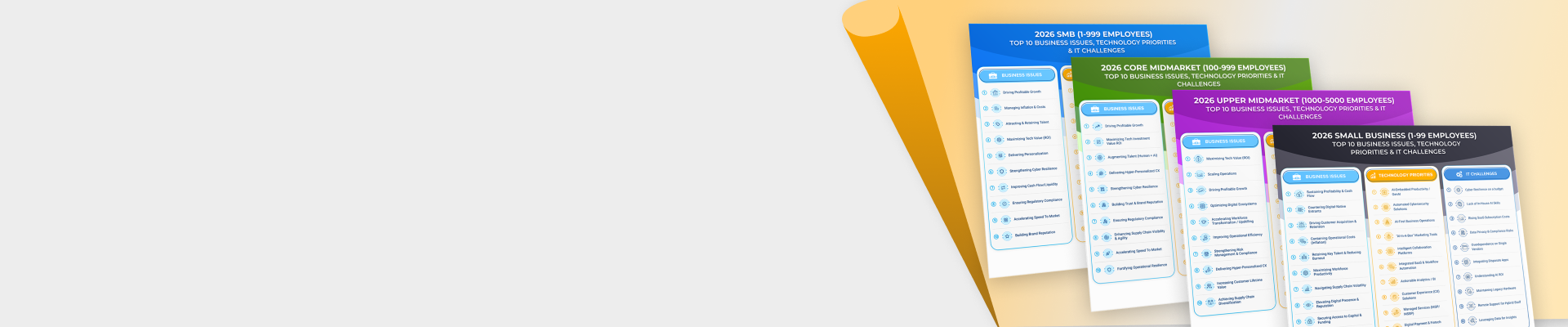
  • 2026 TOP 10 SMB BUSINESS ISSUES, IT PRIORITIES, IT CHALLENGES

    2026 TOP 10 SMB BUSINESS ISSUES, IT PRIORITIES, IT CHALLENGES

  • 2026 TOP 10 SMB PREDICTIONS

    2026 TOP 10 SMB PREDICTIONS

    SMB & Midmarket: Autonomous Business
    READ
  • 2026 TOP 10 PARTNER PREDICTIONS

    2026 TOP 10 PARTNER PREDICTIONS

    Partner & Ecosystem: Next Horizon
    READ
  • IT SECURITY TRENDS

    IT SECURITY TRENDS

    SMB & Midmarket Security Adoption Trends
    LATEST RESEARCH
  • PARTNER ECOSYSTEM

    PARTNER ECOSYSTEM

    Global Channel Partner Trends
    LATEST RESEARCH

Techaisle Analyst Insights

Trusted research and strategic insight decoding SMBs, the Midmarket, and the Partner Ecosystem.
Gitika Bajaj

Indian VARs/SIs Creating First Server Demand within SMBs

ML110 Proliant from HP is a favorite of VARs/SIs in India to sell to SMBs, especially small businesses. It is “robust, configurable and affordable”. In India where there has been considerable drop in sales of commercial servers within enterprises and government segments, VARs/SIs have turned their attention to the ever-elusive SMB market segment.

VARs/SIs from Delhi to Chennai, Mumbai to Kolkata, Lucknow to Jamshedpur, Pune to Hyderabad – you get the picture – hold the key to opening up demand for first server opportunity within the SMBs. They are doing so by delivering two key messages:

    1. Servers help in Business Process Consolidation: With an on-premise server SMBs can install software solutions such as locally available ERP (not SAP), accounting and financial management, CRM and many different vertical applications to improve business processes and thereby grow revenue


    1. Servers help in Email Consolidation: With an on-premise server SMBs can use email applications that promote scheduling, calendaring and sharing within the same domain name. There are still way too many SMBs in India that have employees using individual emails with no common folders


The messaging seems to be working. Channels are optimistic that the small business server spend in India will reach US$75 million in 2013, a jump of 13 percent from previous year. But they also say that the path to influence small businesses will not be easy.

The question is, why have the VARs/SIs taken the lead in creating server demand.

Let us take the example of VARs/SIs in Kolkata. West Bengal is a “dead state”; State government is not spending on IT, Central government is not giving any budgets to the State to spend on IT; therefore VARs/SIs instead of sitting idle are busy pounding the streets of Kolkata, seeking out SMBs and discussing the above two key simple messages which seem to be resonating well. On the other hand, in Delhi NCR region, a hot bed of technology adoption, VARs/SIs are targeting pockets of areas such as Gurgaon and Noida.

Selling to SMBs is a very time consuming and pain-staking process. As one SI put it mildly, “there are no green pastures anywhere; we have to plant the seeds”. These channel partners have to overcome three important barriers to adoption:

    1. Lack of awareness of technologies: Too much information and technical jargon is being thrown at the SMBs forcing them to “tune-off” creating lack of awareness. VARs/SIs therefore are engaging SMBs, one at a time, to make them aware what servers can do for their business


    1. Lack of time: SMBs generally do not have time on their hands to search for a channel partner to help them understand technology. Even if they have the time, business priorities in many cases trumps technology and decisions get pushed to the proverbial eleventh hour


    1. Affordability: Price is still a major factor for purchase of servers and accompanying solutions.


At the other extremes are cities in southern India (beyond Bengaluru and Chennai) such as Kochi, Madurai, etc. where channels are fighting a different battle, the infamous “power-cuts” for nearly 8-10 hours each day. The SMBs in this region are first focused on their usual business continuity before turning their attention to IT adoption. But the relentless channels are not giving up on their pursuit and messaging.

Server vendors like IBM that do not have affordable server products for the small business segment are paying attention to the messaging from VARs/SIs and have begun working with them selectively to organize road-shows in Tier 2 cities from northern to western India, from Lucknow to Nagpur and Bhopal.

Still there are many SIs across the country in India who are unhappy by the continuous evaporation of margins on hardware. Some even have gone to the extreme and said that “the way some vendors are working on lowering the margins on servers and storage, SIs will be forced to alternate business models in the next few years”.

India is a more complex IT market than we usually imagine. Based on local infrastructure capabilities and capacities, India has three different segments:

    1. Totally mature,


    1. Immature, and


    1. Not Mature at all


Nevertheless, the SMB server market is still a massive, slow-moving glacier which has not yet reached the precipice of a waterfall. Till that happens, VARs/SIs are creating the demand and trying to grab the opportunity.

Gitika Bajaj

Davis Blair

Revisiting the Apple Predicament – What's Next?

This article from the New Yorker brings out several good points about how Apple has lost some of its luster over the past months, but is still in good shape on fundamentals, although it did drop to below $400B market cap a few days ago. As we noted in December, Apple was coming under criticism for not being able to scale to demand for the latest iPhone launch and had several other hiccups to deal with, including questionable worker conditions in China and that its principal manufacturer, Foxconn, was rumored to have begun discussions to pick up the slack by investing in new factories in Brazil.

On the other side, Apple was in a bitter legal fight with Samsung, an important supplier and competitor (frienemy), and could not get an injunction to stick after a lengthy lawsuit. A recent ruling in the case reduced damages awarded to Apple from $1.05B to $600M and the appeals process is ongoing. Another cause for concern in our opinion was that Apple had slipped to 6th place in the China mobile segment (the world’s largest and fastest growing major market), where local manufacturers Lenovo and Huawei were eating up share regardless of how much manufacturing was being done by Apple locally. Samsung leads the handset market in China, underscoring another competitive issue – in Korea, Apple is considered the most prestigious handset and it sells very well in the market, while Samsung is considered a premium brand in China due to early and broad Consumer Electronics investments by the Korean conglomerates; Samsung chief among them. China also has affinity with Korea based on the hope they can emulate the incredible economic growth shown by Korea over the last 25 years.

It was looking a little grim, but as noted at the time, Apple’s considerable war chest of almost half a trillion dollars was adequate to stave off short and medium term threats, however, as the above article notes, competitors are closing the gap and have introduced increasingly sophisticated models, most notably Samsung, with its’ Galaxy S line, which is seen as the strongest challenger to Apple’s technical leadership. Samsung’s newest version, the S IV is expected to be introduced this month, and in an example of raising the bar, is rumored to include “eye scrolling” technology.

Device OS Market Share History


The Big Picture

Apple has always been in a market crowded with well-funded competitors. Keeping the OS and architecture closed had major implications to the development of Apple, as seen above Apple never gained more than a 10-12% share of the OS market during the 1980-2000 boom of the PC market, which eventually forced them to accept both MS Office and Intel into their products to remain viable and while keeping a stubbornly loyal following for computing devices. It was really when Steve Jobs applied his design genius to a series of personal mobile devices starting with the iPod, which displaced the Sony Walkman, that Apple found a large enough consumer base to really explode onto the scene. iPhone followed with several versions and then the iPad was introduced in 2010 and the rest is history as they say…

The point here is that Apple became the largest technology company by using high-quality, high aesthetic design principles that allowed it to survive in the PC segment and applying them to a new category in the market: coveted personal technology devices that displace Phone, PC, Camera, Voice Recorder, Wristwatch, GPS, Media Player, Personal Planner, and other single use devices/apps combined into a single, small footprint high-tech productivity tool.

While Apple survived the PC Wars, many (including myself), gave them little more than niche player status and came close to counting them out altogether. The current situation is similar in a couple ways as Apple looks forward, but instead of Microsoft and Intel the arch rivals are Google and Samsung. The chart shows how WinTel dominated the PC segment from 1985-2005, squeezing Apple to 10% of the market. Currently, the rise of Mobile Computing brings hundreds of millions of new devices into the market, passing the threshold where Smartphones eclipse PCs in both volume and installed base within the next few years, creating an Android camp and an Apple camp. This has many implications for Apple, a few of which include:

Innovation: Apple needs to continue to innovate at a rapid pace. In the first 20 years of the PC market, consumers accepted a very high churn rate in both hardware and software categories because each generation was substantially more efficient and productive than the previous one. To prevent a backlash from consumers, Apple and other players are going to have to make fundamental improvements like very accurate voice recognition and new visual interfaces, not just new form factors.

Price/Performance: demonstrated Price/Performance increases in the bandwidth, applications availability and usability for less money will drive higher adoption. Again, looking back to lessons in the Personal Computer market, there was a long period of time where $2,000 was what the market expected to pay for a quality PC, and new models came out at a regular pace with faster CPU cycles, larger memory and storage subsystems, expanded OS and App capabilities, while keeping within the price range. This worked for a long time, until the market became too crowded and some vendors, led by Dell, overhauled their cost structure by cutting out the channel, using direct sales and a more tightly integrated and automated supply chain, giving back to the consumer in the form of lower prices - then it was a race to the bottom. Remember when the hot new vendor was eMachines?. The de-facto premium price-point that has been set for iPhones and iPads in the market is ~$700 and to maintain it there will be pressure to continue delivering more for the same price or less, as the slew of competitors undercut Apple’s premium.

How Many Form Factors?Cutthroat Competition: All of these segments are characterized by intense competition, and with Google’s ownership of both Android and Motorola brands, things become even more interesting in the handset segment. As Apple goes it alone against the whole market, similar competitive issues will appear as they did with PCs; many companies adding applications and value to a standard operating system (Android), diffusing the R&D costs among a whole ecosystem of suppliers while Apple concentrates on staying ahead of everyone by themselves. Ensuring a steady flow of high quality finished goods coming from China, concentrated among a relatively small group of suppliers, could also become an issue as trade friction, consumer backlash and other uncontrollable variables come into play in the global supply chain and domestic market.

As Apple looks to expand into Televisions there is a potential to tap into another ~$120B market, however, this is not going to be like the introduction of the iPhone; the market is mature and growing slowly, ironically dampened by the move to Tablet computers and Internet content, with a lot of heavyweight competitors led by #1 vendor in the world - Samsung. And Google is also waiting in the wings. Déjà vu all over again. If Apple can pull a rabbit out they may be able to add enough value to demand a premium in flat screen TVs, but that is going to be much easier said than done, the brand only goes so far when displayed next to a similar product priced 20% less on the Walmart showroom - Apple's retail success is based on a much different formula. No 35% margins here without the same kind of fundamental improvements discussed above; interface improvements, simple but deep integration with other devices and something like a super green carbon footprint on top of the demonstrated product superiority. Maybe.

Again, Apple proved very resilient as a survivor in the PC wars and many underestimated their staying power. The Market Cap remains near $400B and they have room to maneuver, it will just get harder over time, as it does for every company that gets to the top.

Anurag Agrawal

Lessons from a Business Focused CIO of an SMB

Jagdeep RandawaI first met Jag Randhawa at Dell World. It was a meeting organized by Dell Analyst Relations to showcase Dell’s Cloud Business Applications. Unbeknownst to Dell Analyst Relations, we hardly discussed Dell. What struck me immediately was his smiling demeanor and an earnest desire to be a champion of business innovation and his views on what IT could do to spur growth through employee involvement and implementing new technology ideas.

We re-connected, ten months later at his office.

Jag Randhawa is the VP of IT at CAMICO Mutual Insurance Company, an SMB with slightly less than 100 employees. And he is the quintessential CIO who loves his job, his company and his fellow colleagues. He also showers high praise on Dell’s customer intimacy, likes VMware’s virtualization solutions and embraces Open source.

Specifically, he uses Dell for Network, Switches, PCs, Servers, Storage and is purchasing Microsoft Software. From VMWare, he uses their server virtualization technologies and software like VMotion and inventory management software for managing all the VM servers.

Cloud Focus

His is a Dell shop, to the extent that he has replaced all existing storage and security solutions with those from Dell. He and his IT team of twelve do not work with any channel partners. His philosophy – whichever applications that can be pushed to the cloud without compromising security of his customer data, just do it. And he has done it; CAMICO is using 12 cloud applications which are:

    1. SalesForce.com – Sales Management


    1. SilverPop – Marketing Automation


    1. Nexure – Agency Management Solution


    1. Acuity – Legal Partners Expense Management


    1. DocuSign – Electronic Signature


    1. LearnLive – Webinar Broadcasting and Training


    1. ADP/HCM – Payroll and Human Capital Management


    1. Skype – IM and Video


    1. Paypal and Total Biller Solution – Credit Card Payment Gateways


    1. Concur - Travel Expense Management


    1. RingCentral – Telephony


    1. MailRoute – Email Spam Filter


Business Perspective Focus

To increase employee engagement and help grow the business, he created a Bottom-up Innovation Program at CAMICO, in which employees submit ideas to grow the top-line, increase operational efficiencies, improve customer service, enhance business processes, and reduce cost. This program has generated many valuable ideas, and as a result he is embarking on two of his most ambitious business focused IT projects.

    1. Using Open Source for eCommerce solutions


    1. Developing a Big Data Proof of Concept


Both of the projects are still in infancy stage and they are both being developed using Open Source. To explain further on the eCommerce solution initiative, he says, “We currently host our website and members-only extranet using Oracle Portal, and now we are planning to use Drupal for our website and another open source software for extranet, which is yet to be determined. Our website and extranet also have eCommerce capabilities embedded in it, so we will be porting our eCommerce into this new Open Source portal”.

He is most excited about the big data project which is his initiative to provide actionable insights and perspectives for the business management at CAMICO. When I asked him about the key objective of working on a big data project, he said, “We are experimenting with Big Data using many of the Open Source software to analyze and find correlations among loss trends. The first objective is to find loss causes in our current data and subsequently use these findings to better underwrite future risks.”

Employee Engagement Focus

As mentioned earlier, The Bottom-up Innovation Program was his brain child. The program encourages all employees to submit ideas that could add value to customers or the business. Employees observe their environment, listen to customers, and bring their outside experiences as consumers to generate ideas that could benefit the company or customers. These ideas are validated, refined and prioritized by a committee of fellow employees. For every accepted and implemented idea, employees are recognized for their contributions through intrinsic and extrinsic rewards. This program makes employees more an integral part of the company, thereby increasing employee engagement and retention. The program has become such a success that he is invited to speak at several industry events for the benefit of other organizations. He not only speaks about the concept but also explains the implementation mechanics and expected outcomes of the program.

Overcoming business challenges

Similar to most other CIOs, he and his team have a long list of IT initiatives but the top four initiatives for 2014 and beyond are:

    1. Replace Website, Members-Only and eCommerce platform


    1. Use Big Data for analyzing current and future risks


    1. Move more infrastructure solutions into the cloud


    1. Build targeted Mobile solutions


But there are enough challenges that his team (he detests the word “staff”) has to overcome. As per Jag, the biggest challenge for any IT department is money and talent. He elaborates on his statement, “There is never enough money to do everything we want to do. However in my view, if there is a business justification for an expense, money is never an issue. The definition of business justification is, for every dollar spent how much money the new solution is going to make or save? There are times when you cannot find direct or immediate benefits, so you have to find creative ways to show value and sell new ideas. Cloud applications make it easier to try new solutions without heavy upfront commitment”. To qualify, he quickly states that the big data project was unscripted and not budgeted but he was able to create a business value which catapulted it to be among the top four IT initiatives.

Business Focused CIO

He is very clear in his mind that there has never been a better time to be a CIO. And he has a message for other IT leaders, “Technology has become an integral part of the business. IT leaders should always be thinking of how they can leverage technology to create competitive advantage, grow the business and create operational efficiencies.” As if on cue, he recites what he practices:

    1. Partner with business peers. Look for ways to help them achieve their goals faster using technology.


    1. There is no IT project; every project is a business initiative. If you want funding for any initiative, figure out how it adds value to the business.


    1. Find partners who will help you showcase the value of technology.


    1. Above all, build credibility with your peers by providing excellent service.


Way to go.

Davis Blair

Pick of the Week: Dell’s SMB Integrated Cloud Front Office

Solution for End-to-End Lead-to-Cash Workflow

As part of our Pick of the Week series, we requested an online demonstration of what sounded to be too easy, and were privy to a demo of Dell’s DCBA (Dell Cloud Business Applications) to see the lead to cash process from building customer awareness to sales contract. We were impressed at how far the industry, and Dell, has come in the last few years at solving the practical challenges around marketing and sales integration. Dell is providing enterprise-level CRM capabilities to SMBs that might have run into seven figures (and a year-long implementation) only 10 years ago. And going even further by tying all this front-office activity together with accounting to synchronize invoicing and billing into the process, insuring that sales staff can be paid without spending 12 hours a week updating their CRM records, and Finance does not have to chase down account managers for collections and accounts receivable updates on the 29th of every month.

Small and Mid-Market Companies Choose Online CRM as the Shortest Path to Revenue

SMB CRM Integration

The killer Enterprise Application to emerge at the end of the Client/Server era was CRM, which spawned a huge ecosystem of sales process, configuration and customization experts. The next step was online CRM solutions led by Salesforce.com, a true multi-tenant architecture and Cloud ecosystem in and of itself. The ample supply of CRM expertise, along with the market needs to generate revenue as quickly as possible resulted in a wave of online CRM start ups and then pure-play Marketing Automation vendors that were eager to plug into the accelerating number of customers opting for a services model.


Falling Through the Cracks

Even with the best CRM software and a lot of customization, even for those who spent the most on these systems, and especially large organizations, getting to a state of accurate and current information has always been a challenge. The perpetrators tend to be too many steps in the process, unclear roles and responsibilities, limitations in the software that force workarounds, ineffective hand-off of customer relationships, different levels of process and software maturity, and many others. Much of this was caused by contention for capital budgets, the complexity and expense of internal systems integration and never being able to get ahead of the technology curve, resulting in a large percentage of CRM implementations failing outright. Properly selected and integrated Cloud-based Applications like this one from Dell have already gone a long way to eliminate many of these challenges by offering a shared customer database approach from the very beginning.

Dell SMB Lead to Cash Application


Following the image above, it is quickly apparent that the demand and supply cycles are covered by this approach: Lead to Opportunity, to Proposal, to Customer Support, which is good for the customer. The internal operational cycle is also enabled from Marketing to Sales to Invoicing and Billing, to Customer Service, which makes life a lot easier for everyone involved.

Dell End to End SMB SalesThe demonstration was recorded and we have included relevant excerpts that follow the process. Dell offers Pardot, a leading Marketing Automation Solution for marketing which connects automatically to Salesforce.com by synchronizing User-IDs from each component, in less than a minute. Sales Funnel, Alerts, Dashboard, Forecast are coordinated out-of-the-box, and rules are customizable between the applications.

Next comes Conga, which merges customer information, selected products and services, proposal template and cover letter into a print-ready quotation that shares all data with the appropriate customer and pipeline records.

EchoSign, an e-Signature solution from Adobe follows, allowing the customer to authorize the order securely and purchase immediately, which is always a good thing in Sales.

The next part of the solution solves the ever-present issue of ensuring the Sales and Accounting Systems contain and report the same information. This is accomplished using the process integration presented below:


Dell SMB Lead to Cash Process Automation 1 from Techaisle on Vimeo.


As shown in the image, the same information that is incrementally collected throughout the marketing and sales process is used to auto-populate the agreement, invoice and collections data within the accounting package, for our demo, this was done using QuickBooks Online, one of several pre-configured packaged integrations that do not require manual intervention except for company-specific policies and table structures.

Again, seeing it is more impressive than reading about it:


Dell SMB Lead to Cash Process Automation 2 from Techaisle on Vimeo.

What was the name of your company again?

The benefits of sharing information between Marketing, Sales and Accounting are equally or more important with Customer Service, which is the lifeblood of all companies’ online reputation these days. Taking the data one step further into customer service affords the advantage of having the full customer history at your fingertips while fielding support calls – which provides a higher level of satisfaction and smarter service capabilities.


Dell SMB Lead to Cash Process Automation 3 from Techaisle on Vimeo.


Why this is Important

This is important because it goes back to some basic principles that improve information system management, including:

Move Data, don’t type it more than once. Whether using drop downs to input categories and exact descriptions or whole sections of records or groups of records, moving data will result in fewer errors than typing it into the system. In addition to the accuracy this offers, it eliminates a lot of the drudgery associated with maintaining CRM systems and allows sales people to get back to selling.

Build Information Incrementally. Capturing the same data repeatedly will annoy customers and staff, records should be built up over time and sections of data moved to populate application modules as they are brought online. Dell’s solution does this through progressive web forms for customer records and by sharing data between marketing, sales, accounting and customer service.

Centralize Data. Trying to manage multiple customer databases is confusing, inefficient and causes a lot of frustration. Accuracy, Consistency, Reliability and Timeless are hallmarks of data quality and all suffer from running disparate databases of the same information. While data tends to take on a life of its’ own with volume and increased usage, starting with a design that shares information between systems will eliminate problems down the line and can actually give Small and Mid-Market businessesan advantage over Enterprise customers who have been wrestling with huge CRM database and internal IT for the past 15 years.     

Keep it Simple, Get Going Fast. In a recent survey 77% of SMB complained that even there has been a lot of progress in the past few years, complexity managing IT has grown faster than the problems it is designed to eliminate. SMBs want to spend money on revenue generating activities and reducing costs, which means focus on the core business, not hiring people to manage IT adoption that cannot stay engaged full time on building the business. We were surprised at how easily this whole integrated solution came online, easy enough for a power user to manage and available to use in a matter of days, quicker for those who are familiar with CRM systems.  The Dell solution comes with fixed fee, fixed scope implementation services for all of the applications they sell, making it easy for SMBs to get going quickly with a single vendor for support.

The Bottom Line

Dell’s DCBA solution was announced last September and has come a long way since introduction. In this example the demo provisioned a new account without need for any coding; userIDs tied Sales and Marketing together.  Customers signed the necessary paperwork and and Invoicing data was moved automatically once the new account was opened in QuickBooks. For small and medium sized organizations, finding ways to make best use of their IT investments-- to streamline their sales processes, as in this example here, can be the path to increased sales and help them realize greater business success, and is certainly much easier and cost effective than it used to be.


Trusted Research | Strategic Insight

Techaisle - TA