• TRUSTED RESEARCH

    TRUSTED RESEARCH | STRATEGIC INSIGHT

    SMB. CORE MIDMARKET. UPPER MIDMARKET. ECOSYSTEM
    LEARN MORE
  • BUYER JOURNEY

    BUYER JOURNEY

    SMB & Midmarket Buyers Journey Research
    LEARN MORE
  • BUYER PERSONAS

    BUYER PERSONAS

    SMB & Midmarket Technology Buyer Persona Research
    LEARN MORE
  • ARTIFICIAL INTELLIGENCE

    ARTIFICIAL INTELLIGENCE

    SMB & Midmarket Analytics & Artificial Intelligence Adoption
    LEARN MORE
  • DATACENTER SOLUTIONS

    DATACENTER SOLUTIONS

    SMB & Midmarket Datacenter Solution Adoption Trends
    LEARN MORE
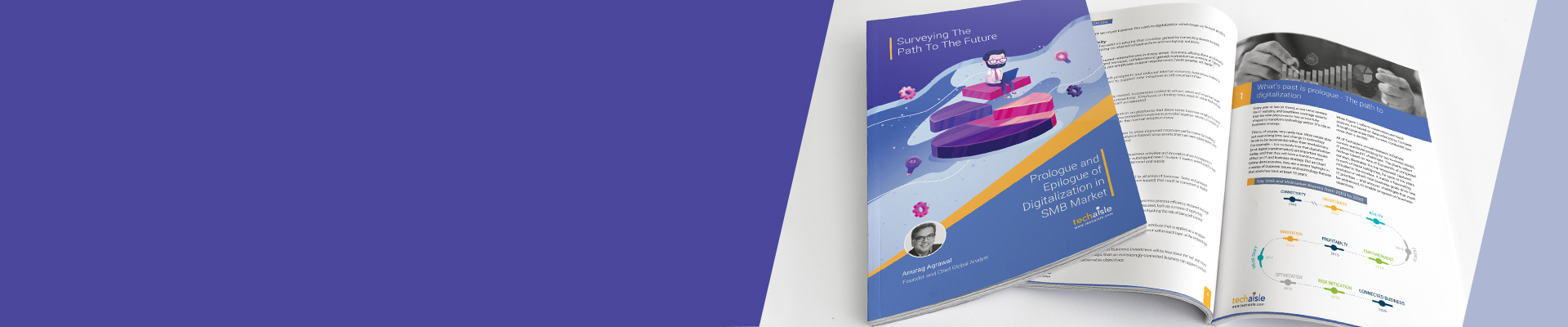
  • INTERWORK 2.0: THE AGENTIC FUTURE OF CONNECTED BUSINESS

    INTERWORK 2.0: THE AGENTIC FUTURE OF CONNECTED BUSINESS

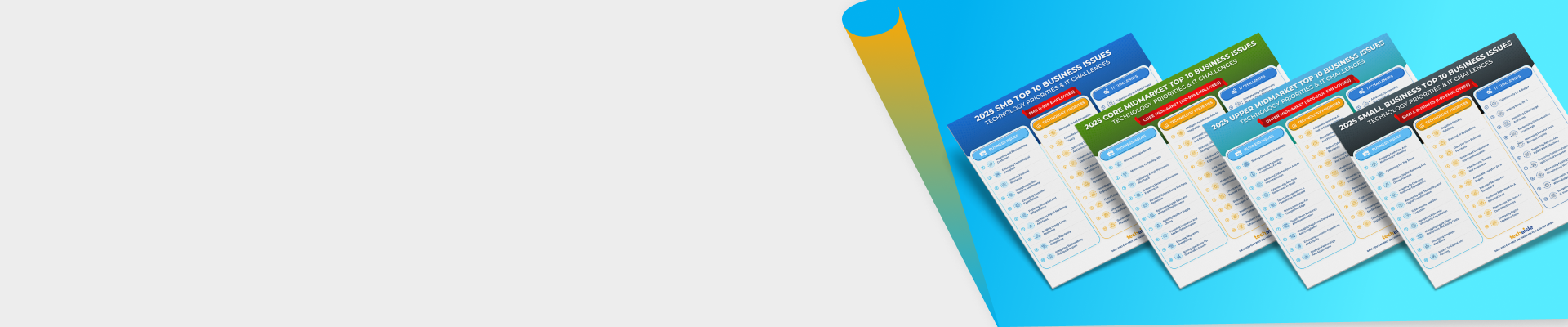
  • 2026 TOP 10 SMB BUSINESS ISSUES, IT PRIORITIES, IT CHALLENGES

    2026 TOP 10 SMB BUSINESS ISSUES, IT PRIORITIES, IT CHALLENGES

  • 2026 TOP 10 SMB PREDICTIONS

    2026 TOP 10 SMB PREDICTIONS

    SMB & Midmarket: Autonomous Business
    READ
  • 2026 TOP 10 PARTNER PREDICTIONS

    2026 TOP 10 PARTNER PREDICTIONS

    Partner & Ecosystem: Next Horizon
    READ
  • IT SECURITY TRENDS

    IT SECURITY TRENDS

    SMB & Midmarket Security Adoption Trends
    LATEST RESEARCH
  • PARTNER ECOSYSTEM

    PARTNER ECOSYSTEM

    Global Channel Partner Trends
    LATEST RESEARCH

Techaisle Analyst Insights

Trusted research and strategic insight decoding SMBs, the Midmarket, and the Partner Ecosystem.
Anurag Agrawal

IT Channel Complexities in India

Mature markets are just around the corner in India.

  • A lot has changed in the last 10-15 years and channels feel that in next 4-6 years by 2013-2014, about 20% of Indian market is predicted as a MATURE MARKET. Ten years ago the awareness for IT was created, PC was becoming a necessity. In last 6 yrs market has really picked up.

  • The India IT market is growing and are looking for big changes. Most of the partners for various MNC brands have recognized the changes and are moving from being mere VARs or System Integrators to solution providers, getting into more of services than selling boxes.

  • A dealer who has been selling software for a long time is now thinking of giving the whole solution. In the hardware market the margins are thinning, so the question is - how to make money?

  • Money comes from services so channels are moving towards better markets like the Managed Services, Infrastructure software implementation, maintaining the hardware as well as the software. This has already happened in the mature markets outside India.

  • One may also witness partnerships here - two big partners merging or two small partners merging forming the equation of 1+1=11 and not 2. Consolidations of various services are happening and some channels are emerging as leaders in the market.

  • Business models are also heading towards a big change. The today’s scenario allows any partner to be ‘single vendor dedicated’. As an example if one is HP partner he is still selling & setting up solutions for Cisco/ IBM/ Mac. Channels opine they have to position themselves as multi brand and multi solution provider. Whatever the demand they should be able to supply it.

  • The customer is negotiating or dealing with one single partner rather than trying multi service providers. This is one big change that has happened among channels keeping in view the changing perspective of the customers. These changes will help India emerge as a mature market.


Challenges in SMB (1-250 employees) segment for IT Vendors:

  • It is a very disorganized segment.

  • The IT maturity level is very low.

  • A lot of patience is required while dealing with this segment.

  • The volume business has always been a key concern.

  • The principles / vendors only interested in managing bigger accounts as more money/ revenue and less effort involved.


Advice in Partner selection criteria:

  • Instead of choosing many partners, vendors should focus on the selection of partners.

  • The partners who are capable should only qualify the selection.

  • They should then be trained and most importantly be supported by the vendor to grow and become a bigger partner of that small town or city.

  •  The corporate clients of a smaller city always lack confidence in the local partners and their capabilities and deliverables. Therefore, a partner from a nearby big city may not be working efficiently but is always looked upon with confidence because of it partnerships & technological capabilities.

  • If the vendors succeed in doing the same with the channels of smaller cities, this will surely be an advantage to ALL.

  • The small city partners have the best of contacts to explore more business. The only challenge they face is the Bandwidth and proper guidance. The Channel partners feel that the vendor should fully support them.


New Technologies:

  • There is and is not awareness about the new technologies among the channels. For example many partners may have only heard about Cloud Computing.

  • Channels feel that the vendors themselves should come forward to promote the new / emerging technologies among their partners as well the users.

  • There is always a demand for the new technologies and the channels are gearing up themselves for this.

  • Channels also feel that today’s customer is obviously more knowledgeable. To cope up with the knowledgeable customers channels have to upgrade their skills and knowledge base. And that is the key to a partner’s growth.

  •  All the big organizations the ITES/ IT companies and large corporate have their own in-house resources. They have a fully fledged IT department which takes care of all their IT needs.

  •  Here, the channels only work as suppliers for the hardware and software.


Takeaway:

The government departments are also in the process of implementing various IT related program primarily for the SMB segment(1-250 employees) especially. This is being considered as the most potential segment in terms of IT growth and expansion.

The grey areas are the SMB and the government. Here the implementation has just begun and it will take another 4-5 years. Today SMB is the very large and the most potential segment and challenge lies in how to deal with them and their needs. The knowledge level of these companies/ this segment is very low as compared to the International markets and standards. The IT deployment in terms of products and human resource is very low and they are dependent on the IT vendors. A lot of knowledge has to go in educating these segments.

Channel partners are investing heavily in Data Centers but it will take time to develop as all the technologies are new.

The channel partners who are at the local level at Tier III & IV cities overall do not have much knowledge base as the bigger partners in the Tier I & II cities, so  they ultimately end up in Box selling. Even the customers of Tier II, III & IV are not well-educated and their understanding level for IT is low. A lot of education has to happen in these cities.

THE IT VENDOR MUST KNOW ITS AUDIENCE FIRST…

Gitika Bajaj
Techaisle
Anurag Agrawal

G20 SMBs: PCs and Servers will be the top areas of IT investment as Economy Improves

G20 SMBs to spend US$455 Billion on IT in 2010 accounting for 89 percent of Global SMB IT spend
G20 Consumer/Households will Likely Spend US$96 Billion on IT in 2010 with a Household PC Penetration of 44 Percent
Anurag Agrawal

Tracking the Value Shift in Computing

Value Shift – It’s a broad term describing a directional shift within an industry. Every industry goes through such shifts periodically. Most of the time such shifts create new challenges and new opportunities. The impact is almost always big – industries re-structure, leaders fall and new leaders are born. Value Shifts rarely occur as a result of a single phenomenon. They are more akin to little ripples that build to a tsunami.

The computing industry has seen its share of value shifts over the last 3 decades – perhaps more rapidly than any other industry. That’s what makes it so exciting! I believe that we are poised for another such shift. It’s not about the Internet, Web 2.0, SaaS or Cloud Computing – these are merely ripples at the end of the day. The emerging Value Shift is about Device Independence.

The computing industry to date has largely been dependent upon PCs. In other words, the industry’s fortunes were tied to the adoption of that one single class of device. Everything else flows from that. Microsoft made the most of it earning billions as did others – including Google. But that dependence appears to be breaking down. I am constantly intrigued by two things these days – the phenomenal success of the iPhone and the current rage in PCs – Netbooks. After all, having spent the last 20 years tracking an industry where speeds, feeds and computing power have ruled, how does one explain people (in droves) buying a lower power platform with shrunken keyboards and screens? iPhones let you view the same websites and web applications that you access from Netbooks, notebooks and desktops. The experience from a usability standpoint is different for any individual device, but you can access the same information. And it’s not limited to websites and web apps. You can use any number of free products to access your PC using an iphone (read about it here ). In other words device independence.

The “Information Fabric”

Padmasree Warrior, the CTO of Cisco puts forth a compelling prediction – the emergence of an “information fabric”. I believe it. The fabric can be defined in many ways and a many levels – from the lowest level network protocols to the highest level where information is consumed by individuals and corporations. Most importantly, the information fabric, I believe, will not limit itself to allow consumption and utilization of information by a single device or even a class of devices. Instead it will enable consumption by a whole range of devices leveraging the unique user experiences of each device.

The Ripples that Matter

It’s not difficult to see the key technologies that are driving this Shift. Of note are continued advances in virtualization and remoting where performance and user experience is improving rapidly. But also worth noting are storage technologies that are becoming common to different kinds of devices – specifically flash storage, whereas in the past application performance was somewhat dependent on type of storage used. The commonly understood technologies impacting bandwidth, throughput improvement, network capacity, data center optimization also continually push us towards device independence.

value-shift

It’s All About Productivity

Ultimately the move towards device independence is about productivity resulting from the freedom to use the device that best suits the work environment at any given point is time (a smartphone, a PC, a Netbook or even a Kindle). A lot of pieces need to fall into place and getting to true device independence will take a long time but there is no doubt that the ripples that started this value shift are transforming into a Tsunami.

Abhijeet Rane
This email address is being protected from spambots. You need JavaScript enabled to view it.
Anurag Agrawal

Notebook v/s Netbook - A market segmented

Yes - Netbooks are all the rage right now but we at techaisle don't believe in the doom and gloom scenarios pointing to the demise of notebooks. This is akin to a donut shop that starts selling bagels. Yes there will be people that come in and but a bagel instead thereby cutting into donut sales or maybe the better analogy is of a shop that sells donuts and mini-donuts. Same product shrunken in size.

[gallery]

But is the netbook now the new notebook? Should PC makers be concerned about cannibalization? Conventional thinking might suggest that to be true. After all, digital music cannibalized (and pretty much destroyed) CD sales, DVDs cannibalized VHS tapes and the list goes on. In all those cases however the new technology delivered a different and unique experience that older technology could not deliver - ability to create your mixes in the case of digital music, buy one song at a time and better viewing experience with DVDs. Cannibalization = replacement but for that replacement to happen, the product has to offer something unique. This is clearly lacking among netbooks whose only claim to fame is being a cheap, lightweight and small device.

So why are netbook sales increasing. We believe two things are happening:

1. Highly price sensitive customers are taking advantage of lower prices sacrificing computing power, screen size, gaming ability etc.

2. A new segment of mobile device buyers are entering the market expanding the market for mobile computing devices.

This is perfectly logical looking at the evolution of the PC market which has increasingly fragmented over time as user needs evolved

1. Early desktop market - Homogenous needs/users - primarily business use. all desktops nearly equal in capability. Minimal price variance observed

2. Continued evolution of desktops - greater price variance, home and small business markets start opening up, growth in ISV base, hardware options, geographic markets

3. Emergence of laptops - addresses latent mobility needs. Few laptop suppliers, premium prices and limited adopters driven by mobility trading off desktop capabilities for mobility

4. Expansion of laptop/notebooks -  better hardware, greater price ranges observed for notebooks. Consumer, SB notebook market emerges. Mobility remains the primary driver but better price performance drives cannibalization of desktops. However, not all desktops will be replaced (at least over any reasonable forecast period). desktop replacement by notebooks will hit a wall at a point where the desktop value proposition exceeds that provided by notebooks

5. Expansion of mobile computing - Mobile computing becomes pervasive through a multitude of devices, netbooks being one of them. Inclusion of phones as viable mobile computing devices expands available price points, user experiences and user needs/behaviors

So while netbooks have been able to expand the market today by attracting new buyers and addressing latent mobility needs (need for small, lightweight device), market expansion will be limited by what we call the "value proposition differential" - the subjective and objective differences in user experience between products. This is a concept that Apple understands very well as evidenced by the success of iPods and iPhones

In other words, while pricing and weight got the market started, it will not be enough to sustain the growth of netbooks.

Trusted Research | Strategic Insight

Techaisle - TA